Best pour-over coffee maker
The brewer decides the style of your cup and how forgiving the brew is. The four worth comparing are the Hario V60, the Chemex, the Kalita Wave and the Origami — and the right one depends on the cup you want and the effort you will actually put in. This guide explains the five specs that separate them, then points you to the picks once they are verified.
A note on how to read this. There is no single best pour-over coffee maker, because a V60 and a Chemex are trying to make different cups. So the value here is the framework — what each design changes — so you can match a brewer to your taste and your patience. Read the framework first, then look at the picks.
How to choose a pour-over coffee maker
Five things decide whether a brewer suits you. Run any pour-over maker through these — they are exactly the columns in the comparison below.
Brew style — bright and fast, or clean and slow
The defining spec. A V60's single large hole drains fast for a bright, clear, tea-like cup; a Chemex's thick filter drains slowly for an exceptionally clean, lighter-bodied cup; a Kalita Wave's flat bed and three small holes sit in between, even and balanced. The brewers hub explains the geometry behind each one. Pick the cup you want first, and the rest follows.
Material — durability and heat, not flavour
Brewers come in plastic, ceramic, glass and metal. Plastic is cheap, light and nearly unbreakable — a sensible first brewer. Ceramic and glass hold heat slightly better and look the part, but a hot-water rinse evens out any heat difference. Material is about durability, heat retention and looks, not the taste of the coffee.
Capacity — match it to how many cups you brew
A brewer sized for one cup keeps the coffee bed deep enough to extract evenly; an oversized brewer leaves it too shallow. A V60 02 or Kalita 155 suits a single cup, while a larger V60, a Kalita 185 or a six-cup Chemex handles two or three. Buy for how you actually drink, not the dinner party you host twice a year.
Filter type — and the ongoing cost
Filters are brewer-specific and a repeat purchase. V60 cone filters are cheap and everywhere; Chemex filters are thick, distinctive and cost a little more; Kalita Wave filters are flat-bottomed and fluted. The Origami takes both V60 and Kalita filters. Factor the filter you will keep rebuying into the decision, and always rinse before brewing.
Ease of use — how much it forgives
Some brewers forgive a rushed, uneven pour; others punish it. The Chemex is the most forgiving, the Kalita Wave close behind, and the V60 the most demanding — it rewards a steady gooseneck pour and a scale. If you want reliable results with less fuss, weight ease of use heavily; if you want to learn control, the V60's sensitivity is a feature.
The brewers compared
A short list of widely available pour-over makers, compared on the five specs above. Specs are verified against manufacturer data and current Amazon listings, and the brew guidance follows widely-accepted SCA-style ranges — no hands-on testing claims, just the numbers and the design notes that decide the fit.
| Best for | Brew style | Material | Capacity | Filter type | Ease of use |
|---|---|---|---|---|---|
| Best overall | Cone dripper (V60 geometry) — single large hole | Ceramic | 1–4 cups (size 02 filter) | Hario V60 size 02 paper filters (sold separately) | Moderate — benefits from a consistent gooseneck pour |
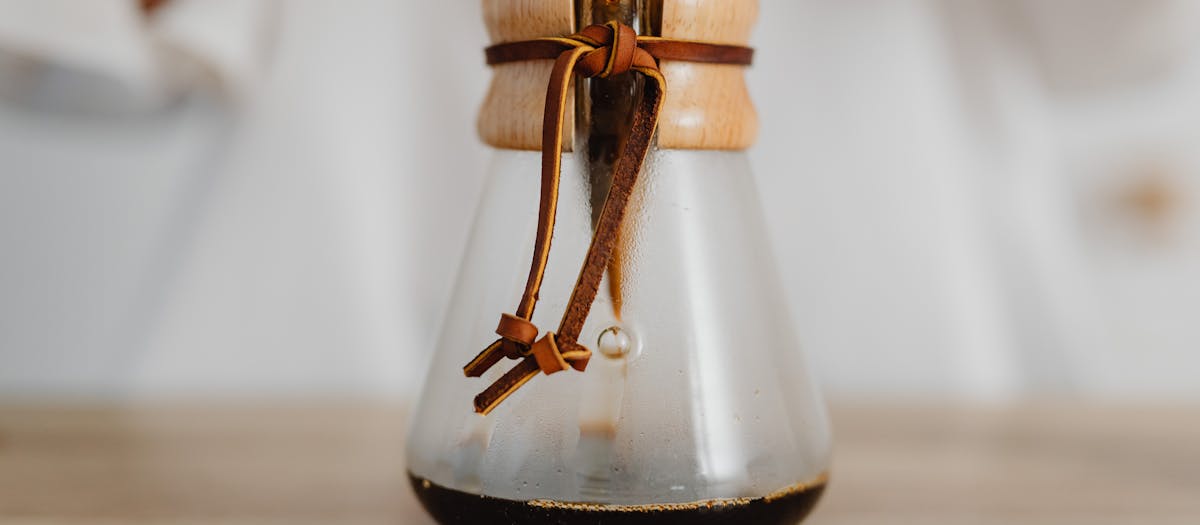
| Best for clean cup | Pour-over with bonded square filter — all-in-one brewer and server | Borosilicate glass with polished wooden collar and leather tie | 6 cups (30 oz brewed) | Chemex bonded square filters (not interchangeable with V60 or Kalita) | Easy — thicker filter slows flow for an extremely clean, sediment-free cup |
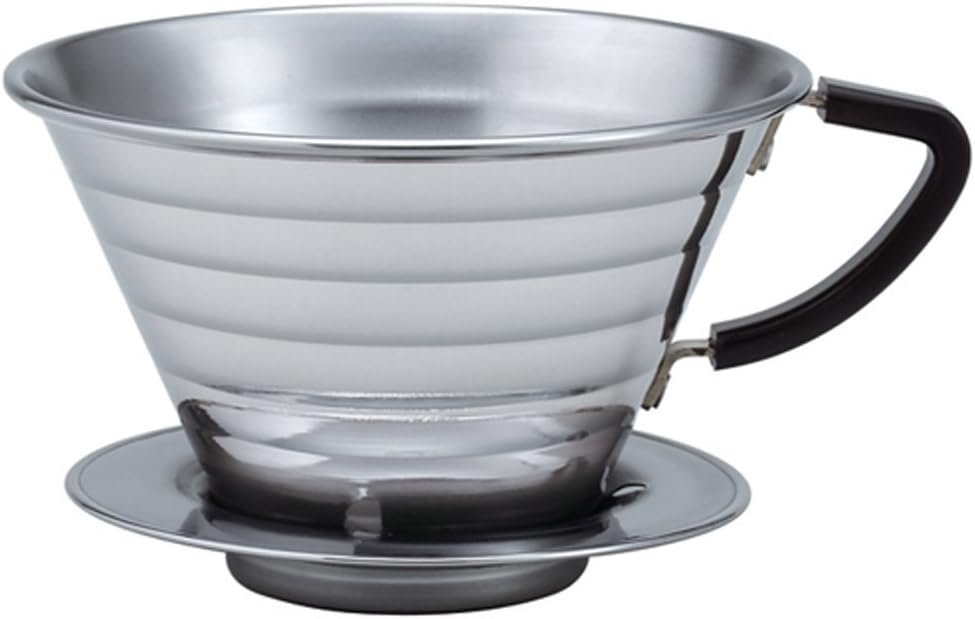
| Best for beginners | Flat-bottom dripper (Wave geometry) — 3 small holes | Stainless steel | 2–4 cups (Kalita Wave 185 filter) | Kalita Wave 185 flat-bottom filters (not interchangeable with V60 or Chemex) | Beginner-friendly — flat bottom and 3 restricted holes reduce pour sensitivity |
| Best budget | Cone dripper (V60 geometry) — single large hole | Polypropylene (food-grade plastic); shatterproof and lightweight | 1–4 cups (size 02 filter) | Hario V60 size 02 paper filters (sold separately) | Moderate — identical brew behaviour to ceramic V60 at a fraction of the cost |
| Best premium / design | Cone dripper with flow-control ridges — single serve | Stainless steel, double-wall vacuum insulated | 10 oz (single serve) | Fellow flat-bottom filters (15 included); Kalita Wave 185 compatible | Easy — vacuum insulation keeps brewing temp stable; 15 filters included |
Our top picks
Best overall: Hario, V60 Dripper 02 White

Best overall
Hario, V60 Dripper 02 White
Hario
- Brew style: Cone dripper (V60 geometry) — single large hole
- Material: Ceramic
- Capacity: 1–4 cups (size 02 filter)
- Filter type: Hario V60 size 02 paper filters (sold separately)
- Ease of use: Moderate — benefits from a consistent gooseneck pour
- Best for: Intermediate to advanced brewers who want maximum extraction control
The Hario V60 size 02 ceramic is the dripper that helped define modern pour-over coffee. Its single large hole and spiral ridge design give the brewer full control over flow rate, making it the go-to choice for dialing in extraction. The ceramic version retains heat well and is a step up from the plastic model.
Last checked 2026-05-21
Best for clean cup: Chemex Classic Series, 6-Cup Pour-Over Glass Coffee Maker

Best for clean cup
Chemex Classic Series, 6-Cup Pour-Over Glass Coffee Maker
Chemex
- Brew style: Pour-over with bonded square filter — all-in-one brewer and server
- Material: Borosilicate glass with polished wooden collar and leather tie
- Capacity: 6 cups (30 oz brewed)
- Filter type: Chemex bonded square filters (not interchangeable with V60 or Kalita)
- Ease of use: Easy — thicker filter slows flow for an extremely clean, sediment-free cup
- Best for: Anyone who wants a bright, clean cup and a table-ready brewer-and-server in one
The Chemex has been producing some of the cleanest, brightest cups in coffee since 1941. Its signature bonded square filter is 20–30% thicker than standard filters, removing oils and fine particles for a remarkably clear brew. The hourglass glass body doubles as a serving carafe, making it ideal for brewing a full pot.
Last checked 2026-05-21
Best for beginners: Kalita Wave 185 Drippers
Best for beginners
Kalita Wave 185 Drippers
Kalita
- Brew style: Flat-bottom dripper (Wave geometry) — 3 small holes
- Material: Stainless steel
- Capacity: 2–4 cups (Kalita Wave 185 filter)
- Filter type: Kalita Wave 185 flat-bottom filters (not interchangeable with V60 or Chemex)
- Ease of use: Beginner-friendly — flat bottom and 3 restricted holes reduce pour sensitivity
- Best for: New pour-over brewers who want a forgiving dripper that rewards consistency
The Kalita Wave 185's flat-bottom design with three small holes makes it one of the most forgiving pour-over drippers available — small variations in pour rate or position have less impact on the final cup compared to a V60. Its stainless steel build is durable enough for daily use and the Wave filter geometry promotes even saturation.
Last checked 2026-05-21
Best budget: HARIO V60 Plastic Coffee Dripper, Size 02, Clear

Best budget
HARIO V60 Plastic Coffee Dripper, Size 02, Clear
HARIO
- Brew style: Cone dripper (V60 geometry) — single large hole
- Material: Polypropylene (food-grade plastic); shatterproof and lightweight
- Capacity: 1–4 cups (size 02 filter)
- Filter type: Hario V60 size 02 paper filters (sold separately)
- Ease of use: Moderate — identical brew behaviour to ceramic V60 at a fraction of the cost
- Best for: Budget brewers and travellers who want authentic V60 performance under $15
The Hario V60 plastic dripper delivers the same spiral-ridge geometry and single-hole design as its ceramic counterpart at a fraction of the price. The food-safe polypropylene is shatterproof and light enough for travel or camping, making this the default recommendation for anyone wanting to try pour-over without committing to a premium dripper.
Last checked 2026-05-21
Best premium / design: Fellow Stagg Pour Over Coffee Dripper 10 oz [X], Stainless Steel Double Wall Vacuum Insulated, Non-Clogging, Fast Drip, Portable Coffee Maker + 15 Filters
![Fellow Stagg [X] stainless steel double-wall vacuum insulated pour-over dripper with 15 filters](https://m.media-amazon.com/images/I/31fQ2yCpn+S._AC_SL1200_.jpg)
Best premium / design
Fellow Stagg Pour Over Coffee Dripper 10 oz [X], Stainless Steel Double Wall Vacuum Insulated, Non-Clogging, Fast Drip, Portable Coffee Maker + 15 Filters
Fellow
- Brew style: Cone dripper with flow-control ridges — single serve
- Material: Stainless steel, double-wall vacuum insulated
- Capacity: 10 oz (single serve)
- Filter type: Fellow flat-bottom filters (15 included); Kalita Wave 185 compatible
- Ease of use: Easy — vacuum insulation keeps brewing temp stable; 15 filters included
- Best for: Single-serve pour-over enthusiasts wanting a portable, heat-retaining all-in-one
The Fellow Stagg [X] is as much a design object as a dripper — its double-wall vacuum-insulated stainless steel body keeps your brew temp consistent from first pour to last drop. The flow-control ridge system slows drainage for better saturation, and the included 15 filters mean you can start brewing straight away.
Last checked 2026-05-21
Who should buy what
Brand-new brewers
A Chemex or a Kalita Wave forgives the uneven pour everyone starts with, so you get a good cup while you learn. A plastic V60 is the cheapest way in if you are happy to weigh your coffee and pour carefully from day one. Do not overthink it — a basic brewer fed fresh, evenly-ground coffee beats a fancy one fed stale pre-ground.
People who want to learn the craft
The V60 is the brewer that teaches you, because its sensitivity makes the effect of grind size and pour speed obvious. Pair it with a scale and a gooseneck kettle and you will learn to taste the difference your choices make. It is the enthusiast's default for a reason.
Households serving two or three
A six- or eight-cup Chemex brews a batch well and doubles as the serving carafe, which is part of its appeal at the table. A larger V60 02 or Kalita 185 also handles a small household if you prefer their cup. Match the capacity to your morning, not your fantasy dinner party.
What to buy next
A brewer is one piece of the setup, and not even the most important one. The upgrade that changes the cup most is the grinder — a burr grinder produces the even grounds that any brewer needs to shine. If you have your brewer sorted, the next stop is the best hand coffee grinder guide, which tiers the options by price. From there it is a kettle and a scale to make every cup repeatable.
Frequently asked questions
What is the best pour-over coffee maker for beginners?
A Chemex or a Kalita Wave is the most forgiving start. The Chemex uses a thick filter that slows the flow and smooths over an uneven pour, and the Kalita Wave has a flat bed and small holes that even out extraction. Both are harder to get wrong than a V60, which rewards a careful pour and a scale.
Is the V60 or the Chemex better?
They make different cups. The V60 drains fast for a bright, clear cup but is sensitive to grind and pour. The Chemex uses a thick filter for an exceptionally clean cup and is more forgiving, and it brews larger batches. Choose the V60 to learn control and the Chemex for easy, clean results for two or three.
What is the Kalita Wave good for?
The Kalita Wave is a flat-bottomed brewer with three small holes and a fluted filter. The flat bed and small drains slow and even out the water, so it is less sensitive to pour technique than a V60 while staying brighter than a Chemex. It is a strong middle path for a beginner who wants forgiving without going full Chemex.
Do different pour-over brewers use different filters?
Yes, and they are not interchangeable. A V60 takes a cone filter, a Chemex takes its own much thicker proprietary filter, and a Kalita Wave takes a flat-bottomed fluted filter. The Origami accepts both V60 and Kalita filters. Always buy the filter shape your brewer takes, and rinse it with hot water before brewing.
What size pour-over coffee maker should I buy?
Match it to how many cups you brew at once. A V60 02 or Kalita Wave 155 suits one cup; a larger V60 02, Kalita Wave 185 or a six-cup Chemex suits two or three. A brewer that is too large for a single cup leaves the coffee bed too shallow, so size down if you mostly brew solo.
Does the brewer material change the taste?
Only indirectly. Ceramic and glass hold heat a little better than plastic, which can help temperature stability, but a quick hot-water rinse of any brewer evens that out. Plastic is cheap, light and nearly unbreakable, which makes it a sensible first brewer. Material is mostly about durability, heat retention and looks, not flavour.
Is a pour-over coffee maker better than an automatic drip machine?
For control and clarity, yes — you decide the water temperature, the pour and the timing, which an automatic machine handles less carefully. The trade-off is effort: pour-over is hands-on for a few minutes. If you value the ritual and a cleaner, brighter cup, pour-over wins; if you want to walk away, a good automatic machine is more convenient.